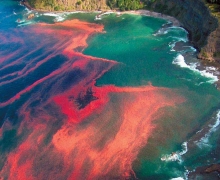
Single-celled marine algae are especially chemically rich, producing toxins that kill fish, marine mammals, and seabirds, contaminate shellfish, and threaten human health. Many predators of these algae – copepods – selectively consume less toxic algae, which in turn sense copepods via an excreted blend of copepod-specific molecules. These algae then become up to 20X more toxic when they sense copepod cues in the open ocean.
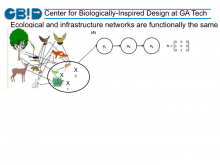
Creating sustainable and resilient cities depends on understanding the properties of food, energy, water and other infrastructure networks. Ecological network analysis ENA is a tool that can be used to understand the connections between network structure, material and energy flow, and resilience. ENA is increasingly applied to both understand and design more sustainable and resilient human infrastructure.
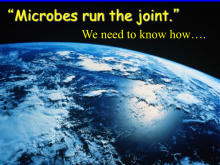
Seaweeds create toxic compounds to deter consumers (fish) and poison competitors (corals). However specific fishes resist these toxins, and some corals also are resistant to their effects. These tolerances may be due to unusual microbes in the gut microbiomes of fishes and in coral mucus coverings. GT has an unusual mixture of marine ecologists, chemists and microbiologists to address these issues.
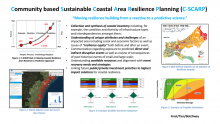
This study seeks to develop a location independent scalable framework for Community based Sustainable Coastal Area Resilience Planning (C-SCARP).
The data-driven framework is adaptable to other locations and/or scales in the future. The proposed C-SCARP framework will make use of an adapted and expanded version of the GoldSET suite of decision support tools that incorporates multi-criteria analysis in a sustainability evaluation framework. Three distinct uses of GoldSET are anticipated: